Race & Allyship
Practical Race and Allyship training exploring racial equality, privilege, microaggressions and how to practise active allyship and challenge racism at work.
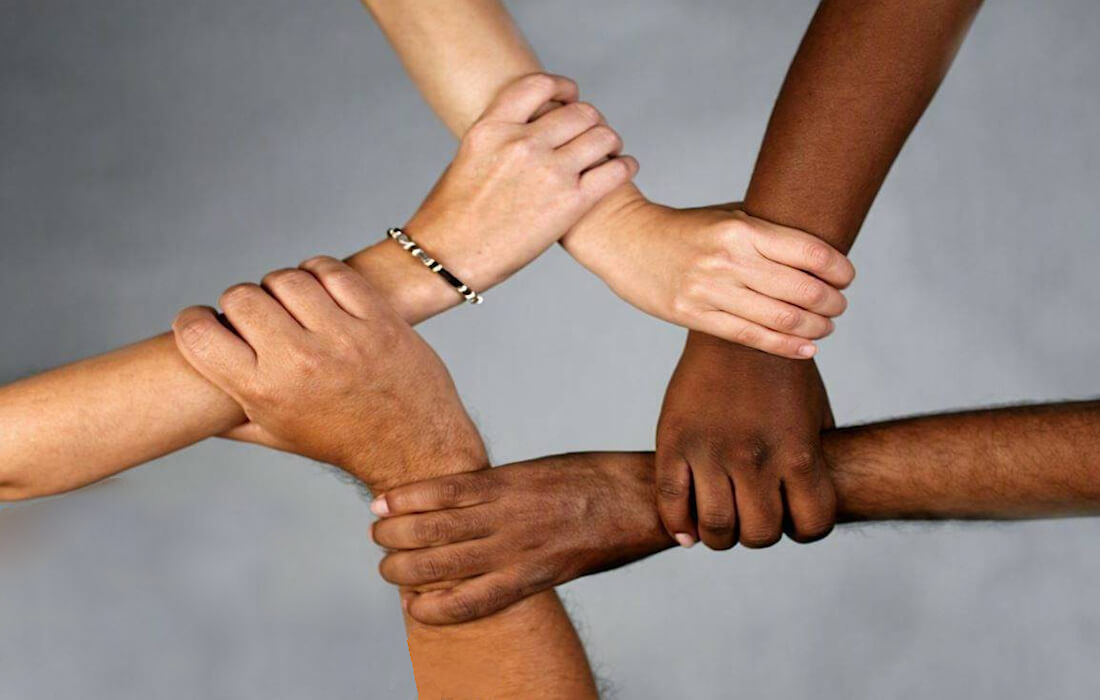
Practical Race and Allyship training exploring racial equality, privilege, microaggressions and how to practise active allyship and challenge racism at work.
Effective allyship is more than expressing support. It involves listening, recognising inequality, understanding how privilege and influence operate, speaking up when it matters and taking practical action alongside people affected by racism. This course helps participants move from good intentions to informed, accountable and active allyship in the workplace.
Allyship is not a title we give ourselves. It is demonstrated through what we notice, how we respond and the actions we are prepared to take.
The course explores four practical elements of active allyship:
Listen to lived experience without expecting colleagues to educate you, justify what happened or speak for an entire racial or ethnic group.
Pay attention to whose voices are heard, who receives opportunities, whose behaviour is questioned and where patterns of exclusion or unequal treatment may be developing.
Use your voice to challenge racial stereotypes, inappropriate comments, exclusion and unfair practices rather than leaving that responsibility to the people affected.
Turn support into practical action through advocacy, amplification, constructive challenge and changes to everyday workplace practice.
Wanting to support racial equality is important, but intention alone does not determine impact. Effective allyship requires curiosity, self-awareness, courage and a willingness to learn when we get things wrong.
Participants explore the difference between passive support and active allyship, including when silence can unintentionally reinforce inequality and how everyday choices can either challenge or reproduce existing patterns.
Allyship is not about speaking for people. It is about listening, standing alongside others, using influence responsibly and helping create conditions in which people can be heard and treated fairly.
Privilege is sometimes misunderstood as meaning that somebody has had an easy life. In equality work, privilege is better understood as the advantages or absence of particular barriers that can accompany aspects of our identity, position or circumstances.
The course explores how race, organisational position and access to influence can affect whose ideas are taken seriously, who feels safe to challenge, who is given the benefit of the doubt and who carries the burden of addressing inequality.
Develop greater awareness of your own position, influence and the opportunities you may have to notice inequality that others are required to navigate.
Help ensure overlooked ideas and concerns are heard while giving credit appropriately and avoiding taking ownership of somebody else's contribution.
Consider when your access, authority or credibility can be used to question unfairness, open opportunities and support more equitable decisions.
Listening is a central part of allyship, but effective listening means resisting the urge to explain away an experience, compare it with our own or immediately focus on our intentions.
Participants consider how to listen with curiosity and respect, believe people when they describe their experiences, respond without becoming defensive and avoid placing responsibility on racially minoritised colleagues to provide education or solutions.
Active allies need to know when and how to use their voice. Speaking up can interrupt harmful behaviour and reduce the burden placed on the person affected, but allyship can become unhelpful when the ally dominates the conversation or assumes they know what somebody else needs.
Challenge racist comments, stereotypes, microaggressions and subtle acts of exclusion rather than relying on somebody else to respond.
Consider what you can say in the moment, what may be better addressed afterwards and when an issue needs to be escalated.
Make space for the person affected to decide what support they want and avoid turning their experience into an opportunity to demonstrate your own allyship.
Support should increase somebody else's agency, not replace it.
Practical scenarios help participants explore how allyship can be demonstrated in everyday workplace situations.
A colleague makes a stereotypical comment about a racial group during a meeting and the room falls silent.
What could you say or do rather than leaving the person affected to challenge it?
A colleague raises a concern about unequal treatment, but their point is minimised and the conversation quickly moves on.
How could you help ensure the concern is heard without taking ownership of it?
You notice that development opportunities repeatedly go to the same people, while some colleagues appear to be overlooked.
How could you raise the pattern constructively and encourage a fairer approach?
Visible statements of support can be valuable, but allyship loses meaning when the appearance of supporting equality becomes more important than the action itself.
Attention shifts towards proving that the ally is a good person rather than understanding the issue or supporting those affected.
Support is expressed publicly but does not translate into challenge, changed behaviour, fairer decisions or sustained action.
Allyship is embraced while it feels comfortable, but disappears when speaking up carries social, professional or personal risk.
By the end of the course, delegates should be better able to:
Race and allyship are relevant across an organisation. This course is suitable for people who want to understand how they can use their voice, behaviour and influence to support racial equality more effectively.
Race & Allyship focuses specifically on how individuals can use their voice, influence and actions to support racial equality. We also offer related programmes for organisations with different learning needs.
For organisations wanting a broader foundation in how racism operates, including bias, privilege, lived experience, challenge and practical anti-racist action.
View course
For leaders who need to understand their responsibility, influence and accountability for creating and sustaining anti-racist workplace cultures.
View course
For organisations ready to move beyond individual awareness and examine culture, systems, policies, accountability and organisational change.
View course
All our courses are tailored to ensure the training reflects your organisation, sector, workforce and equality priorities.
The course can be delivered face-to-face or online via Zoom or Teams.
To support participation, discussion and interaction, we recommend the following group sizes per session:
Need to train a larger workforce? No problem. We regularly work with organisations that need to train larger numbers of employees. Where appropriate, training can be delivered across multiple sessions to ensure everyone receives the same high-quality, interactive learning experience. We can develop a delivery programme to suit your workforce size, locations and timescales.
Please note: the half-day rate is not always available for face-to-face sessions.
Over 25 years' experience delivering equality, diversity and inclusion training, consultancy and professional development.
Keep updated with the latest equality and diversity news, offers and updates.